Why one spell per element
One spell per element. Four spells in total. Each sits permanently on its own D-pad direction, so all four elements are always available without menus, swapping, or loadout editing. Enemy elemental weaknesses and standing near a matching source are the two things this game is built around, and both work at every moment: standing in water beside an enemy weak to water is answered by pressing a direction, not opening a menu.
Tap R2 for the quick form; hold to charge the committed form. Releasing early never fails — it simply casts the quick form. Holding costs more magic than tapping. Before an element's trial is cleared, holding stays capped at the quick form — clearing the trial is what grants the full charge.
Equal power within a type. No spell is ever strictly better than another; variety comes from element, behaviour (pierce, arc, area, status) and how a player builds into it — never from raw numbers.
Elemental identities
Each element answers a different tactical question. None is simply stronger; each stays useful even against an enemy with no matching weakness.
| Element | Identity | Trades away | In exchange for |
|---|---|---|---|
| 🔥 Fire | Time | Immediate damage | Damage that arrives later, as burn |
| 💧 Water | Number | Single-target power | The same power spread across many targets |
| 🪨 Earth | Position | Damage | Control of where the enemy is allowed to be |
| 🌪️ Wind | Displacement | Damage | The ability to dictate distance |
Where each spell stands
Only the Fire Spear's look is finished. Water, Earth and Wind are still in development.
Fire Spear 🔥
The only finished spell. Tap conjures and throws a spear of fire: direct damage on impact, then burn. Hold charges it: the fire grows bigger, brighter and hotter — hitting harder, burning longer, and throwing further.
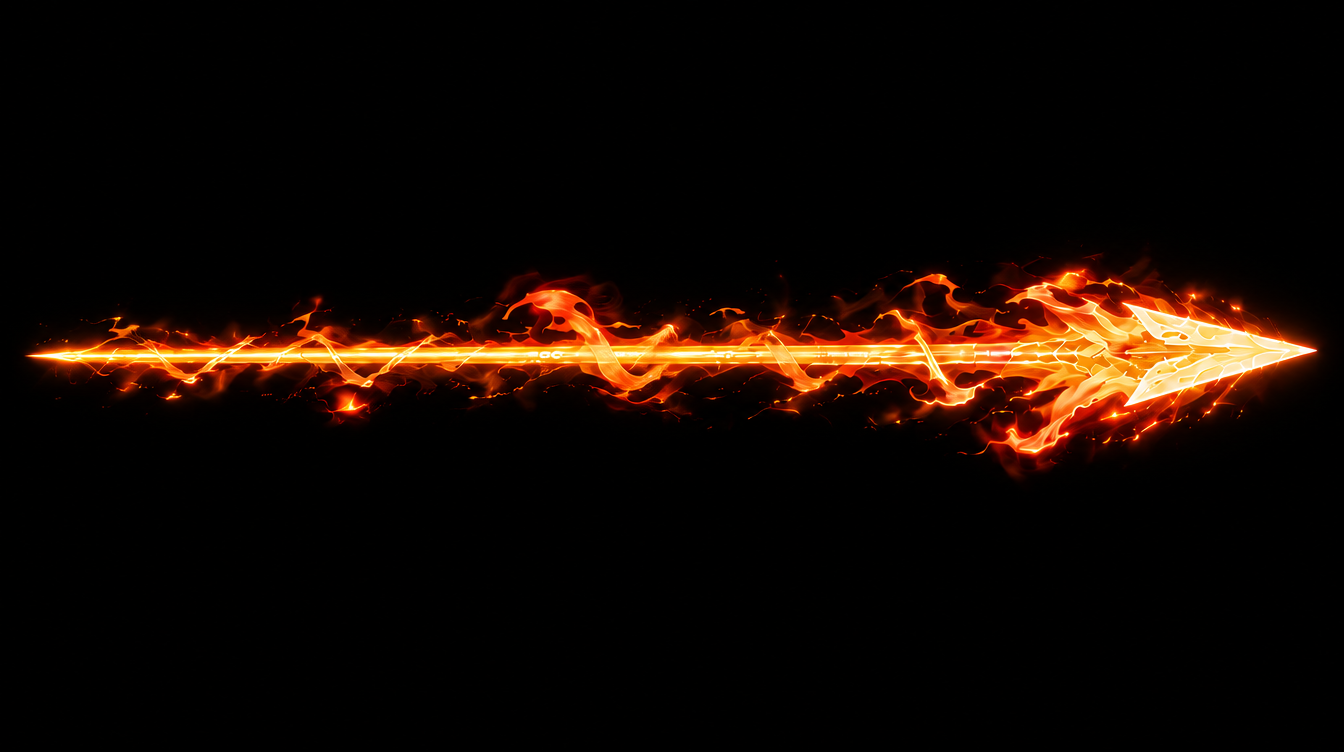
- One size, both stages. The spear itself is about 2 m long whether tapped or charged — only the fire changes between them, not the spear's length.
- It embeds; it never shatters. The spear sticks in the target at the hit point, follows it as it moves, and keeps burning there. A new hit refreshes the lodged spear rather than adding a second one.
- Held in a wide, bent-knee javelin stance, gripped at the shaft's middle in a closed fist, aimed straight from the fist at the target.
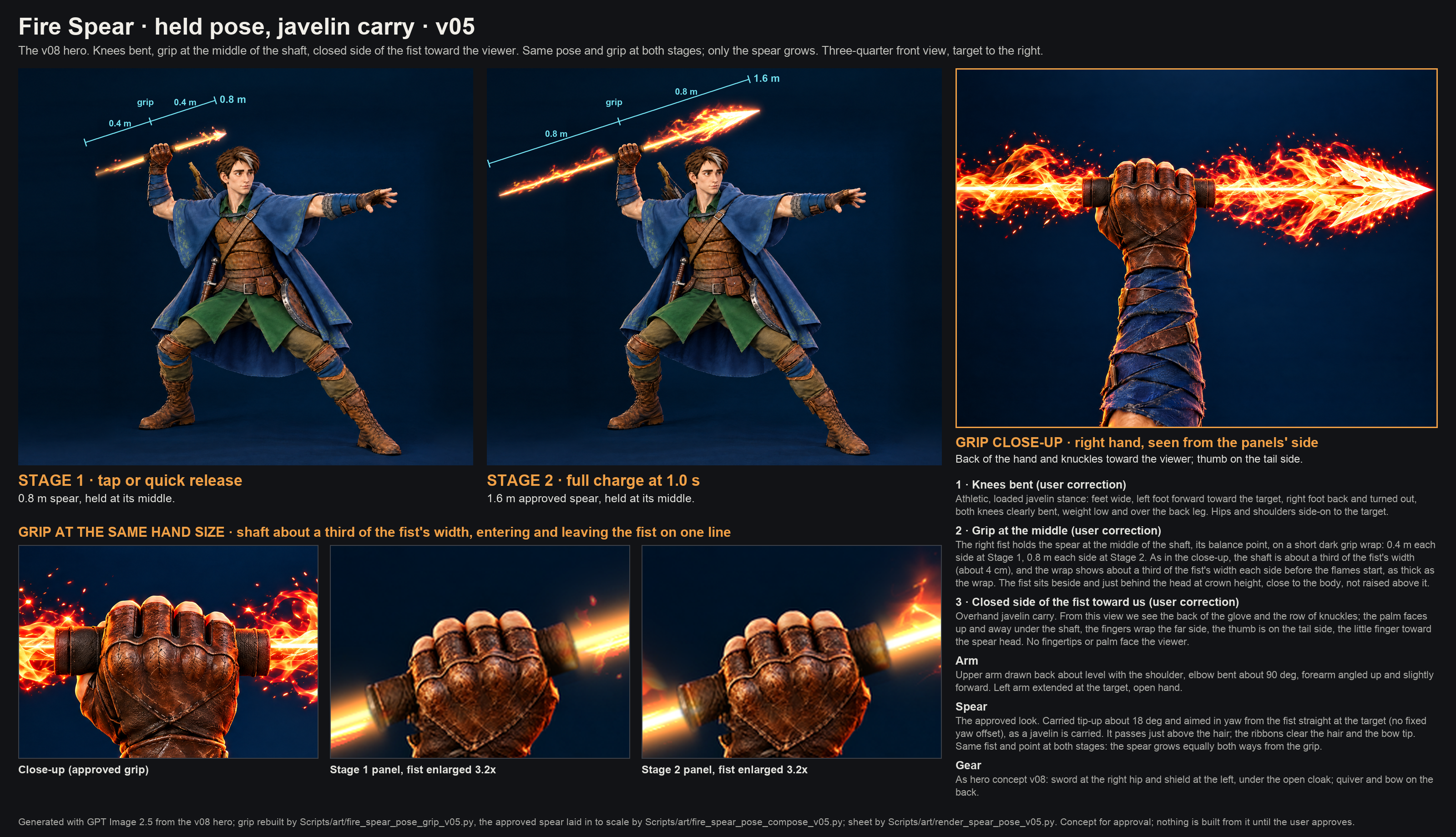
Still in development — details may change
The in-game spear is still catching up to this concept art.
Water Hammer 💧
Still in development. For 5 seconds on a tap, 10 seconds charged, the hammer replaces the sword and grants extra reach and damage. Its haft can block and parry. It grows: the charge stage sets its starting size, and every swing that lands grows it further, up to a cap — culminating in a slam on the third landed swing.
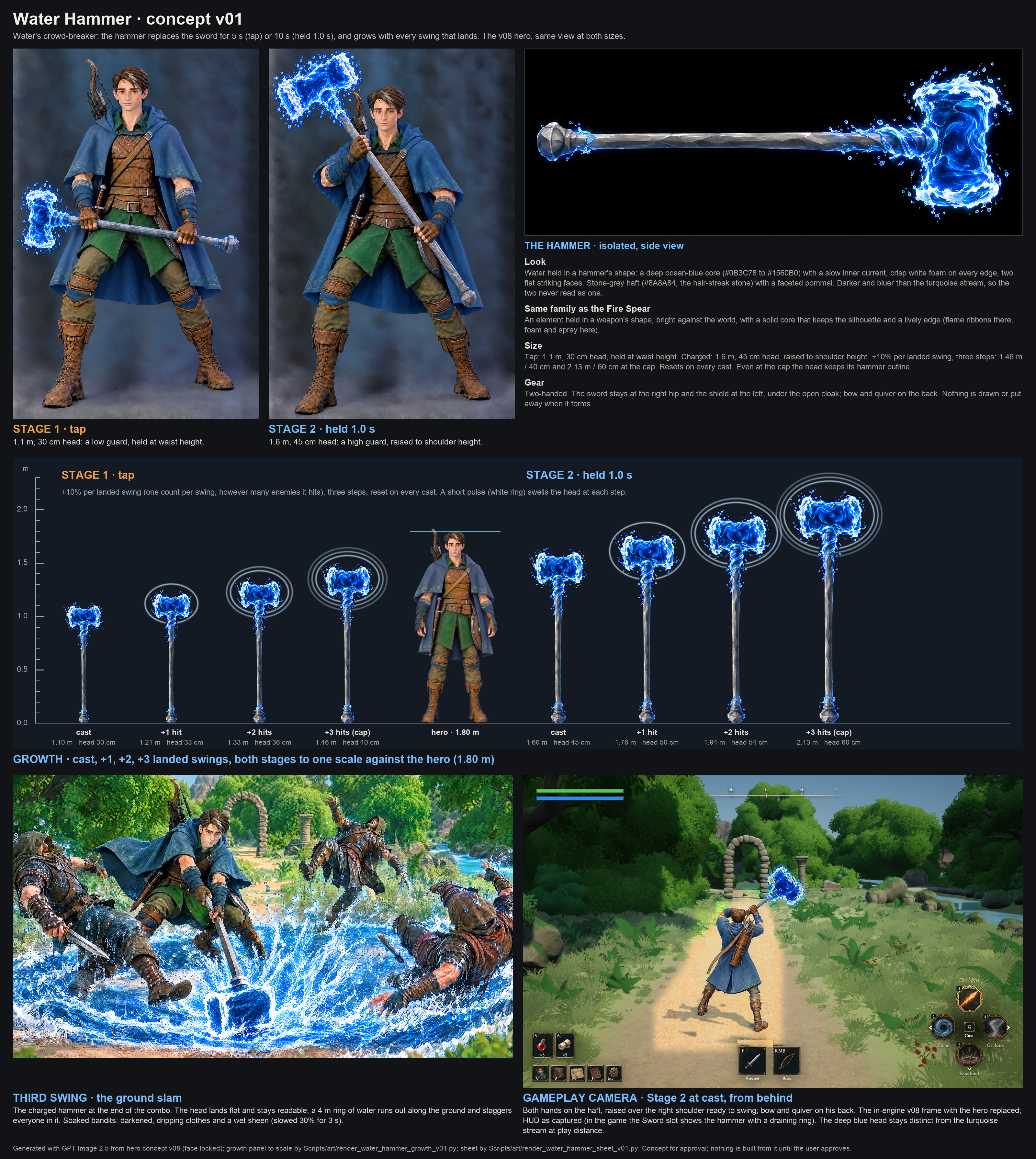
| Tap | Charged | Third-swing slam |
|---|---|---|
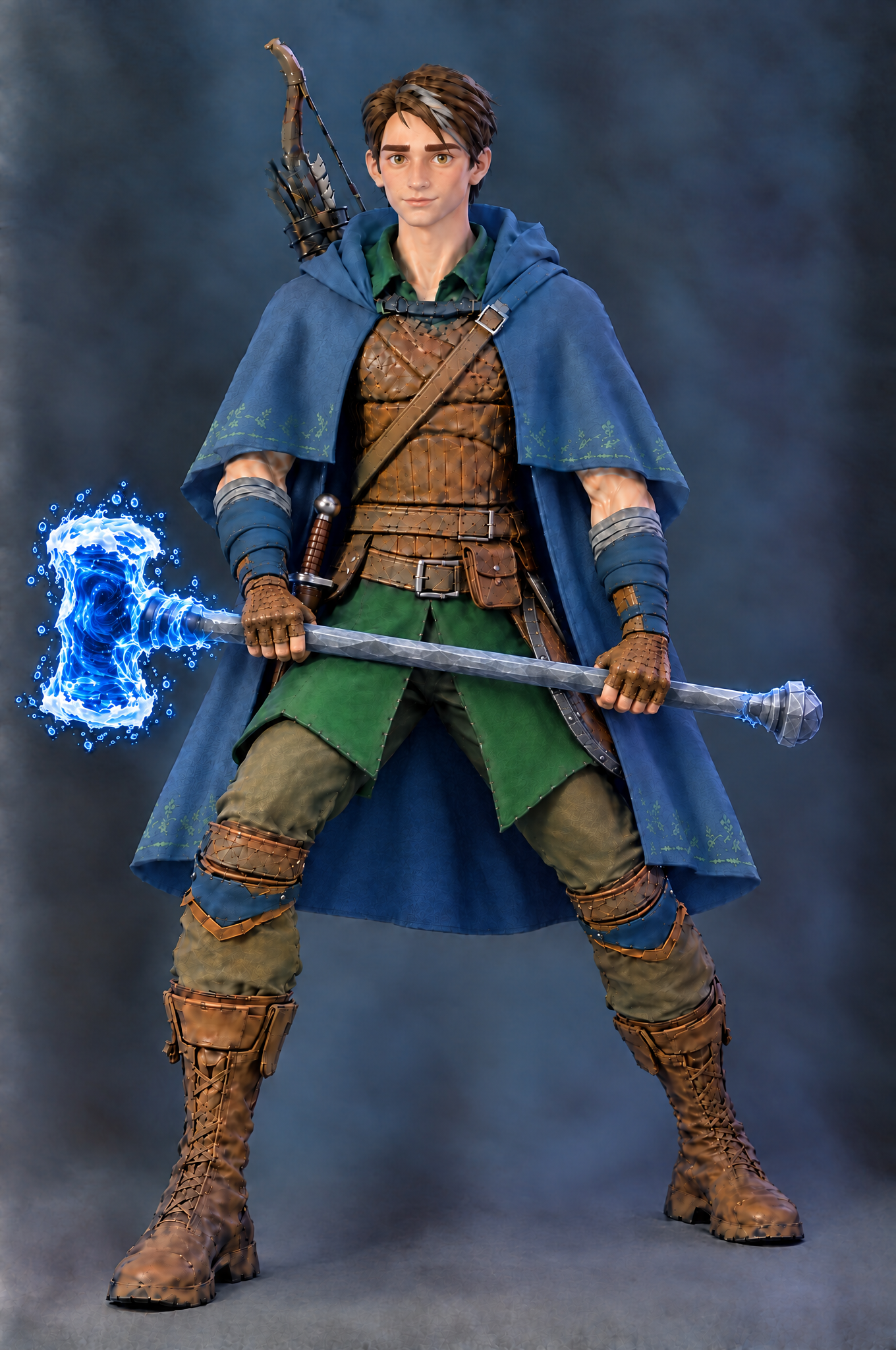 | 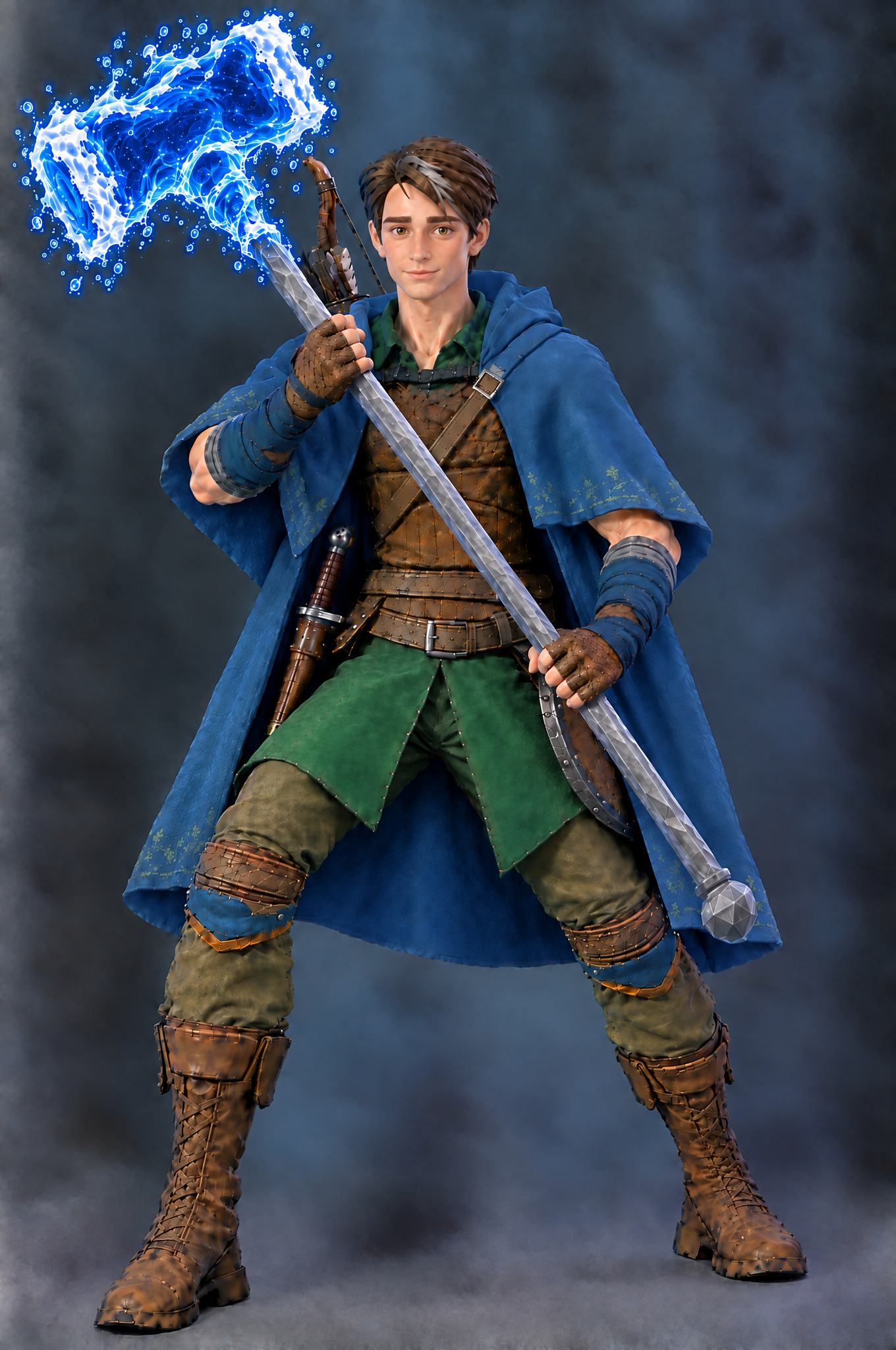 | 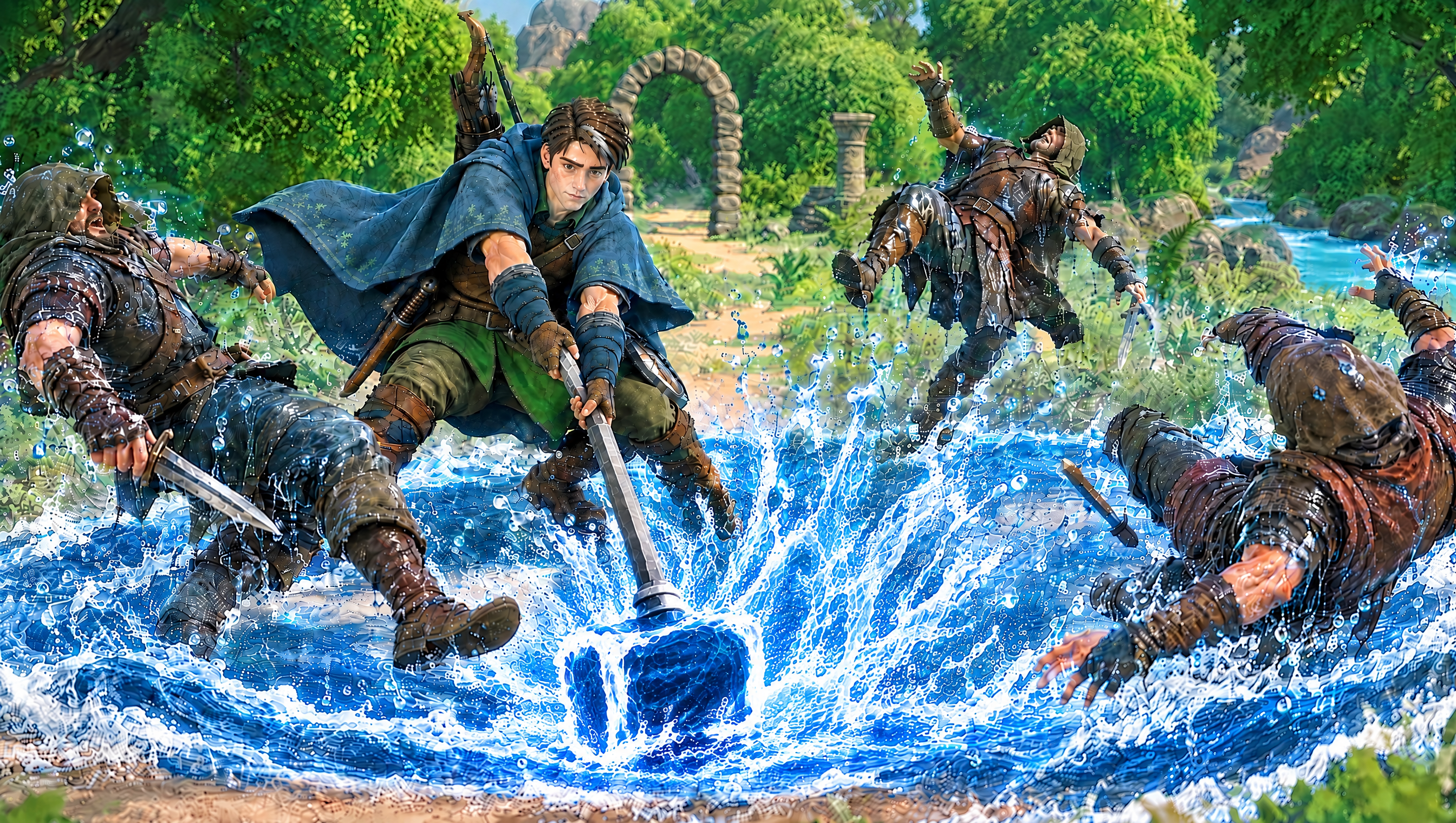 |
Identity: Number — its damage is divided across everyone standing in reach, over time, rather than concentrated on one target.
Rootbind 🪨
Still in development. Most likely keeps this name, but its look still needs work. Identity: Position.
- Tap: roots a single ordinary enemy to the knee for about 2 seconds — light direct damage, then damage for as long as the root holds.
- Hold: roots to the waist for about 4 seconds, and can hold a heavy enemy, which the tap form cannot.
- Stays single-target at every stage — deliberately. An area root was tried and dropped: a hard root on a whole group would do Water's job better than Water does, since stopping beats slowing.
- Earth has no stone wall, on purpose. Earth controls where enemies may go, never what reaches the player — that's Aegis's job.
Gale Tether 🌪️
Still in development. Identity: Displacement.
| Tap | Held | |
|---|---|---|
| Effect | A thread of wind lashes to the aimed point and pulls the hero there in about 0.4 s (within 2 m of a locked enemy). A small gust on arrival deals light damage within 1.5 m | An updraft bursts at the hero's feet, lifting him about 6 m and slowing his fall for about 2 s. Enemies within 3 m are thrown back, take light damage, and are staggered |
| Range | 15 m, up to 6 m height gain; needs a surface to land on | Centred on the hero, 3 m radius |
A later upgrade, Reel In, reverses the pull: with an enemy targeted, the tap pulls the enemy to the hero instead. The tether obeys the same climbing rules as everywhere else — it cannot land on unclimbable surfaces, and cannot end on a wall right after the hero takes a hit.
Still in development — details may change
Gale Tether's final look is still being designed: a curving silver-white thread with a faint teal, distinct from the Fire Spear's red-orange line.
Aegis
Universal defence. A separate, always-available anti-magic barrier, bound to Square. It is not a fifth offensive slot and has no elemental variants to choose between.
- Hold Square to raise Aegis (drains magic continuously, plus more for each magical hit blocked). Tap Square at the right instant for a free magic parry, which deflects the spell and builds enemy stagger.
- Its colour is final: a dedicated violet, used nowhere else in the game — on the barrier itself, its on-screen icon, and its place on the talent disc.
- Its look also reacts to the incoming attack's element — fire flares orange, water ripples blue, earth fractures, wind swirls.
- Aegis is never simply better than dodging — it costs more the harder the incoming spell hits, so a big spell still favours the dodge.
See Weapons and Gear for the matching physical defence (the shield and sword parry), and Talents for how all seven lines — Fire, Water, Earth, Wind, Sword, Bow, Aegis — grow.
How the spells unlock
A plan for when and how the four spells and Aegis come online — planned, not yet built.
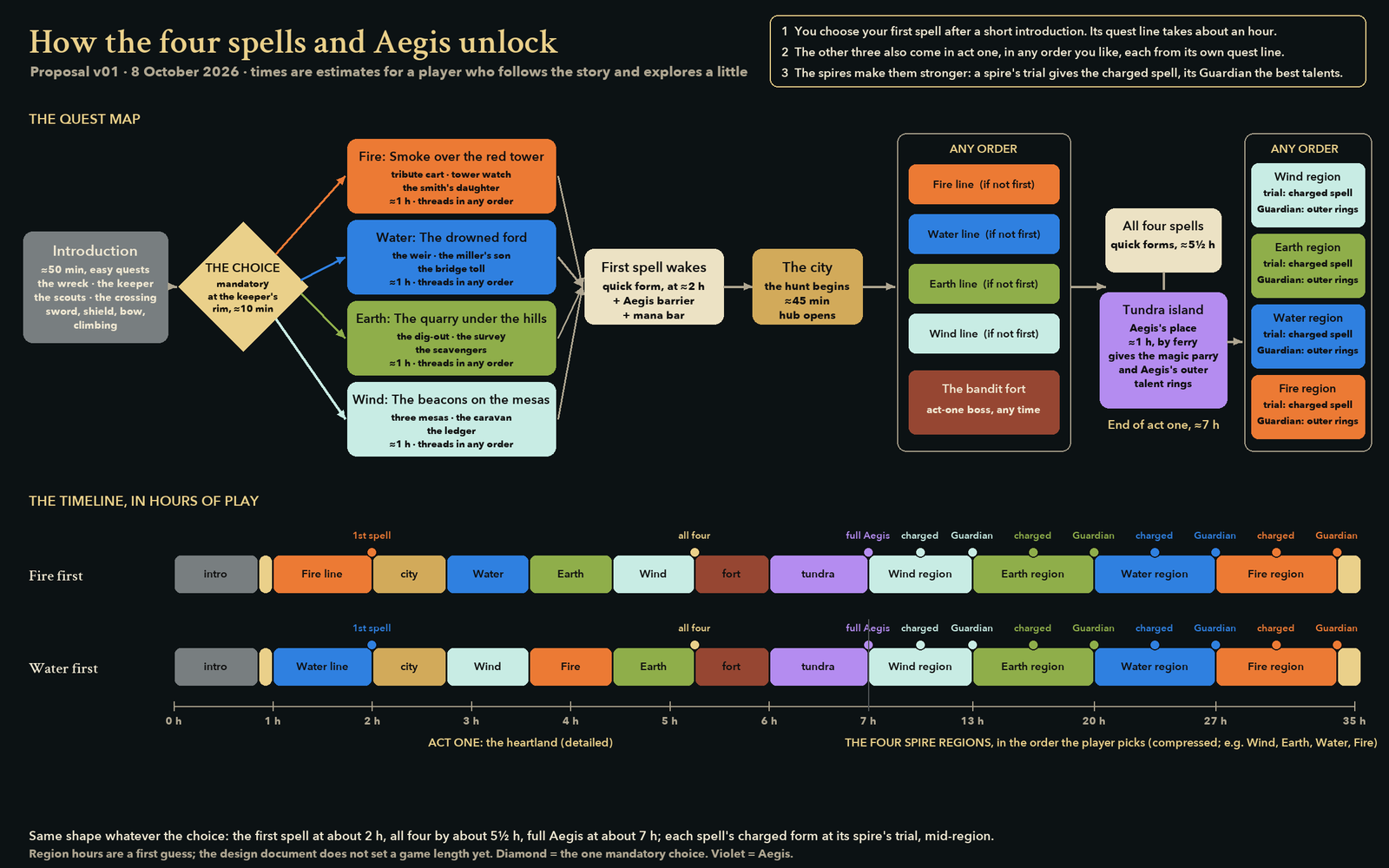
- The introduction, about 50 minutes: wake at the wreck, meet the keeper, recover the bow, and reach the stream crossing — learning movement, the sword, the shield, the bow and climbing, with no magic yet.
- The choice, at the keeper's rim: the one place that sees all four spires. The keeper speaks of each in a veiled line, and the player picks which element's quest line to follow first — all four are still held by the end of act one, whichever is picked.
- One quest line, about an hour, for the chosen spell: three threads in any order, each solvable more than one way, ending in a threatened finale where that element wakes.
- The city: a first visit opens up, pointing to the three remaining quest lines through rumours and people who need help.
- The other three, in any order: each its own hour-long quest line, plus the bandit fort (act one's boss) at any point.
- The Still Isle, for Aegis: once all four spells are held, a required ferry ride to the Still Isle — act one's last step. It's where the magic parry is learned; the basic Aegis barrier still comes with the first spell.
- The spires' trials and Guardians: in each spire region, in any order, that spell's trial grants its charged form, and beating the Guardian opens that element's outer talents.
Still in development — details may change
This flow is planned but not yet built. The first spell lands at about two hours in, once the introduction and the first quest line are both played through.
Elemental sources
Sources make magic stronger; they never lock it away. Every spell always works on its own, anywhere in the world. Standing near a matching source — a deep pool, a bonfire, heavy rock, strong wind — makes that element meaningfully stronger and cheaper to cast. Sources are specific, unmistakable things, never a whole biome — a marsh is not automatically a Water source, a deep pool is.